About Conference
The 8th Global Summit on Diabetes and Endocrinology welcomes leading researchers, endocrinologists, diabetologists, physicians, healthcare professionals, academicians, industry experts, students, and policymakers from around the world to exchange knowledge, foster collaboration, and explore the latest advances in diabetes and endocrine science. Featuring distinguished keynote speakers, interactive scientific sessions, poster presentations, workshops, and exceptional networking opportunities, the summit provides an ideal platform for sharing innovative research, clinical practices, and emerging technologies that are shaping the future of patient care.
We are delighted to announce that the 8th Global Summit on Diabetes and Endocrinology will be held on March 29–30, 2027, in Amsterdam, Netherlands. Centered on the theme, "Advancing Excellence in Diabetes and Endocrinology," the conference will bring together internationally recognized experts to discuss cutting-edge discoveries, evidence-based treatments, precision medicine, digital health innovations, and multidisciplinary approaches to managing diabetes and endocrine disorders.
This premier international event offers an excellent opportunity to strengthen academic collaborations, establish research partnerships, and engage with global leaders committed to improving metabolic and endocrine health. Participants will gain valuable insights into the latest scientific developments, clinical advancements, and healthcare strategies while contributing to meaningful discussions that drive innovation and improve patient outcomes worldwide.
Join us in Amsterdam for two inspiring days of scientific excellence, professional networking, and collaborative learning as we work together to advance the future of diabetes and endocrinology.
Who can attend?
The 8th Global Summit on Diabetes and Endocrinology welcomes an international community of healthcare professionals, researchers, academicians, industry leaders, and policymakers dedicated to advancing diabetes prevention, treatment, endocrine health, and metabolic research. The summit provides an excellent platform for knowledge exchange, scientific collaboration, networking, and the presentation of innovative research shaping the future of diabetes and endocrinology.
Target Audience
-
Endocrinologists
-
Diabetologists
-
Internal Medicine Specialists
-
Clinical Endocrinologists
-
Diabetes Educators
-
Endocrine Surgeons
-
Primary Care Physicians
-
Nephrologists
-
Cardiologists
-
Neurologists
-
Ophthalmologists
-
Pediatric Endocrinologists
-
Obstetricians and Gynecologists
-
Bariatric and Metabolic Specialists
-
Nutritionists and Dietitians
-
Clinical Researchers
-
Biomedical Scientists
-
Public Health Professionals
-
Nurse Practitioners
-
Diabetes Specialist Nurses
-
Pharmacists
-
Laboratory Scientists
-
Medical Students and Postgraduate Students
-
PhD Scholars and Fellows
-
Academic Faculty
-
Healthcare Administrators
-
Diabetes and Endocrine Societies & Associations
-
Pharmaceutical and Biotechnology Companies
-
Medical Device and Diagnostic Companies
-
Digital Health and AI Solution Providers
-
Clinical Trial Organizations
-
Government Health Officials
-
Health Policy Makers
Sessions and Tracks
Track 1: Advances in Diabetes Research
This track highlights groundbreaking discoveries in diabetes research, including molecular mechanisms, disease progression, and innovative therapeutic strategies. Experts will discuss translational research that bridges laboratory findings with clinical practice. Emerging technologies in diabetes diagnosis and treatment will also be explored. Sessions encourage collaboration between researchers and clinicians to accelerate scientific innovation. Participants will gain insights into future directions in diabetes management and personalized medicine.
Track 2: Clinical Endocrinology
Clinical endocrinology focuses on the diagnosis and management of endocrine disorders affecting metabolism, growth, and hormonal balance. Discussions will cover advances in endocrine diagnostics, evidence-based therapies, and patient-centered care. Experts will present challenging clinical cases and treatment outcomes. The track emphasizes multidisciplinary approaches for improved endocrine healthcare. Attendees will explore current clinical guidelines and future therapeutic developments.
Track 3: Type 1 Diabetes
This track explores the autoimmune mechanisms responsible for Type 1 diabetes and recent progress in disease prevention. Topics include insulin therapy innovations, immune modulation, artificial pancreas systems, and pancreatic islet transplantation. Researchers will discuss genetic susceptibility and biomarkers for early diagnosis. Clinical trials evaluating emerging therapies will also be highlighted. The sessions promote collaboration toward improving long-term patient outcomes.
Track 4: Type 2 Diabetes and Metabolic Syndrome
Type 2 diabetes remains one of the fastest-growing global health challenges. This track examines obesity, insulin resistance, metabolic syndrome, and cardiovascular complications. Presentations will focus on novel medications, lifestyle interventions, precision medicine, and prevention strategies. Experts will discuss risk prediction models and public health initiatives. The sessions aim to improve disease management through integrated clinical care.
Track 5: Gestational Diabetes and Women's Health
Gestational diabetes significantly affects maternal and neonatal health worldwide. This track addresses screening guidelines, pregnancy management, postpartum follow-up, and long-term metabolic risks. Researchers will discuss hormonal influences and reproductive endocrinology. Preventive interventions and nutritional management during pregnancy will also be explored. Sessions emphasize improving maternal and infant outcomes through evidence-based care.
Track 6: Pediatric Diabetes and Endocrine Disorders
Children with diabetes and endocrine diseases require specialized diagnosis and treatment approaches. Topics include childhood obesity, growth disorders, congenital endocrine diseases, puberty abnormalities, and Type 1 diabetes management. Experts will discuss psychosocial support and family-centered care. Emerging pediatric technologies and clinical research will also be featured. The track promotes better lifelong health outcomes for young patients.
Track 7: Obesity and Weight Management
Obesity is closely linked to diabetes and endocrine dysfunction. This track focuses on obesity pathophysiology, pharmacological therapies, bariatric surgery, nutritional strategies, and behavioral interventions. Researchers will examine metabolic adaptation and weight-loss sustainability. Discussions include multidisciplinary approaches to obesity prevention and management. Participants will explore personalized weight management programs for diverse populations.
Track 8: Diabetes Technology and Digital Health
Rapid technological advancements are transforming diabetes care. This track covers continuous glucose monitoring, insulin pumps, artificial intelligence, wearable devices, digital therapeutics, and telemedicine. Experts will evaluate real-world implementation and patient outcomes. Discussions will include remote patient monitoring and mobile health applications. The sessions showcase the future of technology-enabled diabetes management.
Track 9: Precision Medicine in Endocrinology
Precision medicine enables individualized treatment based on genetics, biomarkers, and patient characteristics. This track explores genomic medicine, pharmacogenomics, personalized endocrine therapies, and molecular diagnostics. Researchers will discuss clinical applications and future opportunities. Emerging technologies supporting personalized healthcare will be presented. The track highlights innovations improving treatment effectiveness and patient safety.
Track 10: Thyroid Disorders
Thyroid diseases remain among the most common endocrine disorders. Sessions will discuss hypothyroidism, hyperthyroidism, thyroid cancer, autoimmune thyroid diseases, and advanced diagnostic methods. Experts will review updated treatment guidelines and surgical innovations. Novel biomarkers and imaging techniques will also be presented. Participants will gain comprehensive knowledge of thyroid disease management.
Track 11: Adrenal and Pituitary Disorders
Adrenal and pituitary gland disorders significantly impact hormonal regulation. This track covers adrenal insufficiency, Cushing syndrome, pituitary adenomas, acromegaly, and hormonal replacement therapy. Researchers will discuss imaging advancements and minimally invasive surgical techniques. Clinical case discussions will emphasize diagnostic challenges. Sessions encourage multidisciplinary collaboration for optimal patient care.
Track 12: Diabetes Complications
Long-term diabetes complications contribute substantially to morbidity and mortality. This track addresses diabetic nephropathy, retinopathy, neuropathy, cardiovascular disease, diabetic foot complications, and chronic wound management. Experts will discuss early detection strategies and preventive interventions. Emerging therapies targeting complication pathways will also be highlighted. The sessions promote comprehensive complication prevention and management.
Track 13: Nutrition and Medical Nutrition Therapy
Nutrition is fundamental to diabetes prevention and management. This track explores dietary interventions, carbohydrate management, plant-based nutrition, fasting approaches, nutritional counseling, and precision nutrition. Experts will present evidence-based dietary recommendations. Discussions include culturally appropriate nutrition strategies for diverse populations. Participants will learn practical approaches to improve metabolic health.
Track 14: Exercise, Lifestyle and Diabetes Prevention
Healthy lifestyle interventions remain the cornerstone of diabetes prevention. Sessions examine physical activity, behavioral modification, sleep, stress management, and community-based prevention programs. Researchers will discuss exercise physiology and metabolic adaptations. Evidence supporting lifestyle medicine will be reviewed. The track encourages sustainable approaches to reducing diabetes risk.
Track 15: Cardiometabolic Health
Diabetes and cardiovascular disease frequently coexist, increasing health risks. This track explores hypertension, dyslipidemia, heart failure, vascular biology, and cardiometabolic therapies. Experts will discuss integrated treatment strategies and cardiovascular risk reduction. Novel biomarkers and clinical trials will also be presented. Sessions focus on comprehensive patient-centered cardiometabolic care.
Track 16: Endocrine Oncology
Hormone-related cancers require specialized endocrine management. This track covers thyroid cancer, adrenal tumors, neuroendocrine tumors, pituitary neoplasms, and endocrine aspects of oncology. Researchers will discuss molecular diagnostics and targeted therapies. Advances in precision oncology and immunotherapy will be explored. Participants will gain insights into multidisciplinary cancer care.
Track 17: Bone Health and Mineral Metabolism
Endocrine disorders significantly influence bone metabolism and skeletal health. Topics include osteoporosis, vitamin D deficiency, calcium disorders, parathyroid diseases, and fracture prevention. Experts will discuss novel therapeutic agents and diagnostic imaging. Clinical management strategies for metabolic bone disease will be highlighted. Sessions emphasize maintaining lifelong skeletal health.
Track 18: Reproductive Endocrinology and Fertility
Hormonal disorders affect reproductive health in both men and women. This track addresses infertility, polycystic ovary syndrome (PCOS), male reproductive endocrinology, assisted reproductive technologies, and hormonal therapies. Researchers will discuss endocrine influences on fertility and pregnancy. Advances in reproductive medicine will be presented. The sessions encourage integrated reproductive healthcare.
Track 19: Diabetes Pharmacology and Therapeutics
Innovative drug development continues to improve diabetes outcomes. This track explores insulin analogs, GLP-1 receptor agonists, SGLT2 inhibitors, combination therapies, and future pharmacological innovations. Experts will review clinical trial evidence and treatment optimization. Discussions include medication safety and individualized prescribing. Participants will learn about next-generation therapeutic options.
Track 20: Artificial Intelligence in Diabetes Care
Artificial intelligence is revolutionizing disease prediction, diagnosis, and personalized treatment. Sessions will explore machine learning, predictive analytics, automated insulin delivery systems, clinical decision support, and healthcare data integration. Researchers will discuss ethical and regulatory considerations. Real-world AI applications will also be demonstrated. The track highlights the future of intelligent diabetes care.
Track 21: Regenerative Medicine and Stem Cell Therapy
Regenerative medicine offers promising solutions for diabetes treatment. This track focuses on stem cell therapy, pancreatic beta-cell regeneration, tissue engineering, gene editing, and cellular therapies. Experts will discuss preclinical discoveries and clinical translation. Emerging regenerative technologies will be explored. Sessions aim to advance curative approaches for diabetes.
Track 22: Public Health and Global Diabetes Burden
The increasing prevalence of diabetes demands coordinated public health action. This track addresses epidemiology, healthcare disparities, prevention programs, health economics, policy development, and population-based interventions. Researchers will discuss global strategies to reduce diabetes incidence. Collaborative international initiatives will be highlighted. The sessions promote sustainable public health solutions.
Track 23: Endocrine Genetics and Genomic Medicine
Genetic discoveries continue to transform endocrinology. This track examines inherited endocrine disorders, genomic sequencing, molecular diagnostics, epigenetics, and rare endocrine syndromes. Experts will discuss precision diagnostics and targeted treatment approaches. Emerging genomic technologies will be presented. Sessions foster collaboration between geneticists and endocrinologists.
Track 24: Diabetes Education and Patient Engagement
Patient education is essential for successful diabetes self-management. This track explores health literacy, digital education platforms, behavioral counseling, motivational interviewing, and patient empowerment. Experts will discuss strategies to improve treatment adherence. Innovative educational technologies and community outreach programs will be showcased. Sessions focus on enhancing quality of life through informed self-care.
Track 25: Emerging Innovations in Endocrinology
Rapid scientific advances continue to reshape endocrine medicine. This track features novel biomarkers, biosensors, nanomedicine, wearable technologies, molecular therapeutics, and future healthcare innovations. Researchers will present breakthrough discoveries with clinical potential. Discussions emphasize translational science and interdisciplinary collaboration. Participants will gain insights into next-generation endocrine healthcare.
Track 26: Future Perspectives in Diabetes and Endocrine Research
The closing scientific track explores the future of diabetes and endocrinology through multidisciplinary collaboration, global research partnerships, and innovative healthcare models. Experts will discuss emerging challenges, precision healthcare, digital transformation, and sustainable medical innovation. Sessions encourage young investigators, clinicians, and scientists to share visionary ideas. The track provides a platform for forecasting future research priorities and improving global endocrine health outcomes.
Participant Options & Benefits
8th Global Summit on Diabetes and Endocrinology March 29–30, 2027 | Amsterdam, Netherlands
The 8th Global Summit on Diabetes and Endocrinology brings together endocrinologists, diabetologists, physicians, researchers, educators, healthcare professionals, students, and industry leaders from around the world. The conference offers an outstanding platform to present groundbreaking research, explore emerging technologies, exchange scientific knowledge, and establish global collaborations across all major conference tracks, including diabetes management, endocrinology, obesity, thyroid disorders, metabolic diseases, pediatric endocrinology, reproductive endocrinology, endocrine oncology, diabetes technology, precision medicine, nutrition, and preventive healthcare.
1. Presenter Registration
-
Present your latest scientific discoveries through oral or poster presentations across the conference tracks.
-
Receive valuable feedback from internationally recognized experts in diabetes, endocrinology, and metabolic medicine.
-
Showcase innovative clinical research, laboratory studies, and healthcare solutions to an international audience.
-
Gain opportunities for publication in conference proceedings or affiliated scientific journals.
-
Enhance your academic profile and expand international research collaborations.
2. Delegate Registration
-
Attend keynote lectures, scientific sessions, workshops, panel discussions, and symposia covering all conference tracks.
-
Learn about the latest advances in diabetes prevention, endocrine disorders, obesity management, precision medicine, and digital healthcare.
-
Network with leading endocrinologists, clinicians, researchers, healthcare providers, and policy experts.
-
Receive conference materials, including the scientific program and abstract book.
-
Stay updated on emerging diagnostic techniques, therapeutic innovations, and evidence-based clinical practices.
3. Student Registration
-
Take advantage of discounted registration fees designed specifically for undergraduate, postgraduate, doctoral, and medical students.
-
Participate in educational sessions conducted by internationally recognized experts.
-
Present research through poster or oral presentations and receive constructive scientific feedback.
-
Build professional connections with senior researchers, clinicians, and fellow students.
-
Discover career opportunities in endocrinology, diabetes research, clinical practice, biotechnology, and pharmaceutical sciences.
4. Industry Registration
-
Showcase innovative medical devices, pharmaceuticals, insulin therapies, diagnostic technologies, laboratory equipment, digital health platforms, and healthcare services.
-
Promote your products and services to an international audience of healthcare professionals and decision-makers.
-
Increase brand recognition through exhibition booths and sponsorship opportunities.
-
Explore current market trends and future developments in diabetes and endocrine healthcare.
-
Establish strategic partnerships with hospitals, universities, research institutes, healthcare organizations, and industry leaders.
5. Virtual Attendance
-
Access live-streamed keynote lectures, scientific sessions, and workshops from anywhere in the world.
-
Watch recorded presentations on demand after the conference.
-
Participate in interactive virtual discussions and networking sessions.
-
Engage directly with speakers through live question-and-answer sessions.
-
Experience the complete scientific program without the need for international travel.
Benefits for Participants
-
Gain comprehensive insights into the latest research, innovations, and clinical advances presented across all conference tracks.
-
Learn from internationally recognized experts through keynote presentations, workshops, and multidisciplinary scientific sessions.
-
Expand your professional network by connecting with endocrinologists, diabetologists, physicians, nutritionists, researchers, educators, healthcare professionals, and industry representatives from around the world.
-
Discover collaborative research opportunities, international partnerships, funding prospects, and career development pathways.
-
Explore cutting-edge technologies, artificial intelligence applications, continuous glucose monitoring systems, insulin delivery innovations, wearable devices, pharmaceuticals, and digital healthcare solutions transforming diabetes and endocrine care.
-
Strengthen your clinical expertise and research knowledge through evidence-based discussions, case studies, and interactive educational programs.
-
Earn valuable professional recognition by presenting research and contributing to scientific discussions addressing current and future challenges in diabetes and endocrinology.
Join Us at Diabetes and Endocrinology 2027
The 8th Global Summit on Diabetes and Endocrinology will be held on March 29–30, 2027, in Amsterdam, Netherlands. This prestigious international event welcomes endocrinologists, diabetologists, physicians, researchers, academicians, nurses, dietitians, pharmacists, healthcare professionals, students, policymakers, biotechnology experts, and industry representatives committed to advancing diabetes and endocrine healthcare.
Whether your interest lies in Type 1 Diabetes, Type 2 Diabetes, Gestational Diabetes, Obesity, Thyroid Disorders, Adrenal Disorders, Pituitary Diseases, Pediatric Endocrinology, Reproductive Endocrinology, Osteoporosis, Metabolic Syndrome, Diabetes Technology, Precision Medicine, Artificial Intelligence in Healthcare, Nutrition, or Preventive Endocrinology, the conference provides an exceptional opportunity to exchange knowledge, present innovative research, build global collaborations, and contribute to improving patient care worldwide.
Register today and become part of an inspiring international scientific gathering dedicated to shaping the future of diabetes prevention, endocrine research, metabolic health, and innovative patient care in Amsterdam, Netherlands.
Abstract Review Process
Abstract Review Process for the 8th Global Summit on Diabetes and Endocrinology
March 29–30, 2027 | Amsterdam, Netherlands
Abstract Submission and Review
Researchers, clinicians, academicians, healthcare professionals, and industry experts are invited to submit their original abstracts through the official conference submission portal. Submissions are welcomed across all conference tracks, including Diabetes Mellitus, Type 1 & Type 2 Diabetes, Clinical Endocrinology, Pediatric Endocrinology, Obesity & Metabolic Disorders, Thyroid Disorders, Adrenal Diseases, Pituitary Disorders, Reproductive Endocrinology, Diabetes Technology, Artificial Intelligence in Diabetes Care, Precision Medicine, Diabetic Complications, Nutrition & Lifestyle Management, Endocrine Oncology, Osteoporosis & Bone Health, Cardiometabolic Diseases, Gestational Diabetes, Islet Cell Biology, Diabetes Nursing, Public Health, and Emerging Therapeutics.
All submitted abstracts will undergo a rigorous peer-review process conducted by the Scientific Committee. Each submission will be evaluated based on its relevance to the conference theme, originality, scientific significance, methodological quality, innovation, and overall contribution to diabetes and endocrine research and clinical practice.
Abstract Acceptance
Following the completion of the review process, corresponding authors of accepted abstracts will receive an official Abstract Acceptance Letter via email. Acceptance of an abstract confirms its scientific approval but does not automatically confirm participation. To secure a presentation slot in the scientific program, the presenting author must complete the conference registration within the specified deadline.
Registration Guidelines
-
Each registration is valid for one participant only.
-
Every accepted abstract must have at least one registered presenting author.
-
Co-authors who wish to attend the conference must complete their own registration and pay the applicable registration fee.
-
Registered co-authors are eligible for a 15% discount on the Non-Presenter (Listener) Registration Fee.
-
Abstracts without a registered presenting author may not be included in the final conference program or proceedings.
Certification
-
Presentation Certificates will be awarded to registered presenting authors after the successful completion of their oral or poster presentation.
-
Registered co-authors and listeners will receive Participation Certificates upon attending the conference.
-
Digital certificates will be provided where applicable after the event.
Co-Author Discount
To receive the co-author registration discount, authors are requested to contact the organizing committee before completing the registration process. The conference team will provide the required instructions and discount code to ensure the reduced registration fee is applied successfully.
Important Information for Co-Authors
-
Each co-author attending the conference must register separately.
-
A 15% discount is available on the Non-Presenter (Listener) Registration Fee.
-
Prior communication with the organizing committee is required to activate the discount.
-
Participation certificates will be issued only to registered and paid co-authors.
For any questions regarding abstract submission, conference tracks, registration, presentation formats, or participation, please contact the organizing committee. We look forward to welcoming you to the 8th Global Summit on Diabetes and Endocrinology, taking place on March 29–30, 2027, in Amsterdam, Netherlands, for two days of scientific exchange, collaboration, and innovation in diabetes and endocrine healthcare.
Visa Process
Visa Process for the 8th Global Summit on Diabetes and Endocrinology
March 29–30, 2027 | Amsterdam, Netherlands
Planning to attend the 8th Global Summit on Diabetes and Endocrinology in Amsterdam, Netherlands? This guide will help you complete your visa application smoothly and prepare for your visit to one of Europe's leading destinations for scientific meetings.
Step 1: Complete Your Registration
Register for the conference through the official registration portal. Once your registration has been confirmed, you will receive an official Invitation Letter, which can be used to support your visa application for the Netherlands.
Step 2: Determine the Appropriate Visa
Most international participants traveling to the Netherlands for scientific conferences will require a Schengen Short-Stay Visa (Type C). This visa allows eligible visitors to attend conferences, business meetings, academic events, and professional gatherings within the Schengen Area for short-term stays. Please verify the visa requirements based on your nationality before submitting your application.
Step 3: Prepare the Required Documents
Applicants are generally required to prepare the following documents:
-
A valid passport with sufficient validity beyond the planned stay.
-
Completed Schengen visa application form.
-
Official conference Invitation Letter.
-
Conference registration confirmation.
-
Passport-sized photographs meeting Schengen visa specifications.
-
Travel itinerary, including flight reservations (if available).
-
Hotel or accommodation confirmation.
-
Proof of sufficient financial resources, such as recent bank statements or employer sponsorship.
-
Valid travel medical insurance covering the Schengen Area.
-
Any additional supporting documents requested by the Dutch embassy or visa application centre.
Step 4: Submit Your Visa Application
Submit your visa application through the appropriate Dutch Embassy, Consulate, or Visa Application Centre (VAC) in your country. Schedule your appointment as early as possible, as appointment availability and processing times may vary.
Step 5: Attend Your Visa Appointment
Attend your scheduled appointment with all required documentation. Depending on your country of residence, you may be required to provide biometric information and answer brief questions regarding the purpose of your visit.
Step 6: Visa Processing
Visa processing times vary by country and season. Participants are strongly encouraged to apply at least 6–8 weeks before the conference to allow sufficient time for processing and any additional document requests.
Step 7: Receive Your Visa
After approval, collect your passport and carefully verify that all visa details are correct before confirming your travel arrangements.
Helpful Tips
-
Begin your visa application as early as possible.
-
Ensure all submitted documents are complete, accurate, and consistent.
-
Keep printed and electronic copies of your invitation letter, registration confirmation, accommodation details, insurance documents, and travel itinerary.
-
Check the latest visa requirements and processing updates through the official Dutch immigration authorities before applying.
We look forward to welcoming distinguished endocrinologists, diabetologists, physicians, researchers, clinicians, nurses, academicians, healthcare professionals, nutritionists, pharmaceutical experts, industry leaders, and students from around the world to the 8th Global Summit on Diabetes and Endocrinology, taking place on March 29–30, 2027, in Amsterdam, Netherlands. Join us to exchange knowledge, present innovative research, and collaborate on advancing diabetes care and endocrine health worldwide.
Market Analysis
Analysis of the Endocrinology Drugs Market
Anticipated growth in the endocrinology drugs market is projected at a CAGR of 6.8% during the forecast period from 2022 to 2027.
Segmentation of the Endocrinology Drugs Industry
In accordance with the report's scope, endocrinology pertains to the field of physiology and medicine focusing on hormones and endocrine glands. Drugs addressing disorders of these glands fall under the category of endocrinology drugs. The Endocrinology Drugs Market is categorized by Therapy Area (Adrenal Insufficiency, Diabetes, Thyroid Hormone Disorder, and Other Therapy Areas), Distribution Channel (Hospital Pharmacies, Retail Pharmacies, and Online Pharmacies), and Geographic Regions (North America, Europe, Asia-Pacific, Middle East, Africa, and South America). The report also provides insights into market sizes and trends across 17 different countries in key global regions.
Endocrinology Drugs Market Trends
Diabetes Expected to Lead the Market in the Forecast Period
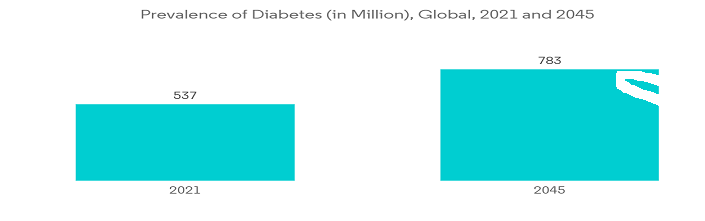
Diabetes ranks as the most prevalent endocrine disorder in the United States. According to data from the United States Centers for Disease Control and Prevention, the number of people with diabetes increased from 34.2 million in 2018 to 37.3 million in 2020. The International Diabetes Federation (IDF) reported in November 2021 that 1 in 6 adults worldwide lives with diabetes, with nearly half of those with diabetes in Mexico remaining undiagnosed. In the North America and Caribbean region, 1 in 7 adults (51 million) are affected by diabetes, according to the same source.
Moreover, the Centers for Disease Control and Prevention's 2021 updates indicate that new diabetes cases among U.S. adults aged 18 years and older numbered 1.4 million in 2019. Among adults aged 45 and older, the incidence of diagnosed diabetes increased significantly compared to those aged 18 to 44 years. This notable rise in new cases with age, particularly between 45 and 64 years, is expected to drive the demand for endocrinology drugs throughout the forecast period.
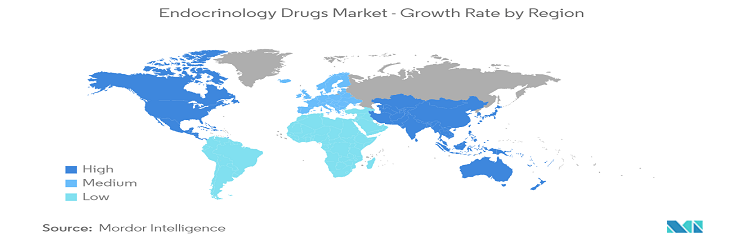
North America's Expected Market Dominance in the Forecast Period
North America is projected to hold a significant market share due to its robust healthcare infrastructure, high rates of obesity, unhealthy dietary habits, changing lifestyles, and continuous introduction of new products. For instance, in August 2021, the United States Food and Drug Administration approved the rapid-acting insulin Lyumjev (insulin lispro-aabc injection) 100 units/mL, indicated to enhance glycemic control in adults with type 1 and type 2 diabetes. Additionally, the approval of the first interchangeable biosimilar insulin product, Semglee (insulin glargine-yfgn), was granted by the United States Food and Drug Administration in July 2021.
These approvals are expected to bolster growth in the endocrinology drug market. Furthermore, Rybelsus received Health Canada's approval in April 2020 for managing type 2 diabetes mellitus in adults. Considering these factors, North America is poised to maintain its dominance in the endocrinology drugs market throughout the forecast period.